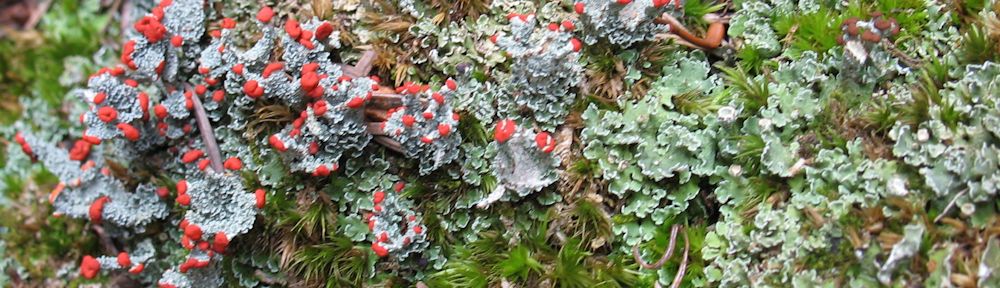
The Lichen Family Tree
Lichen taxonomy presents a unique challenge. This is because lichens are composite organisms. With multiple unrelated organisms combining to form one lifeform how do we name and classify these creatures? The solution by lichenologists is to defer to the fungal component. In the following pages I hope to provide an overview of the diversity in Colorado lichens.
The next difficulty in discussing lichen taxonomy is the inconvenient fact that lichens are not a single evolutionary unit. In other words all lichens are not each others closet relatives. Interspersed with the lichens are many different non-lichenized fungi1. This means that fungi have evolved to cohabitate with photosynthetic organisms multiple times in history.
So we can start the family tree knowing that we are in the kingdom Fungi. Next we move down to phylum. The vast majority2 of lichens are in the phylum Ascomycota, so named for the fruiting bodies characteristic of many organisms in the group. These include all of our common Colorado Lichens. Us humans are in the phylum Cordata, or the vertebrates, so everything from earthworms to a tiger.
Next up we get our major branches that include some common Colorado lichens. The classes. Humans get to represent our own class of Mammalia, the mammals. Other Chordate classes are birds, fish, amphibians and reptiles. So lets dive into the major lichen containing classes.
Lecanoromycetes
The is the big one and contains a good majority of Colorado lichens. It’s so big that it needs it’s own page. It contains just about every lichen you are likely to encounter in Colorado outside of the groups below.
Eurotiomycetes
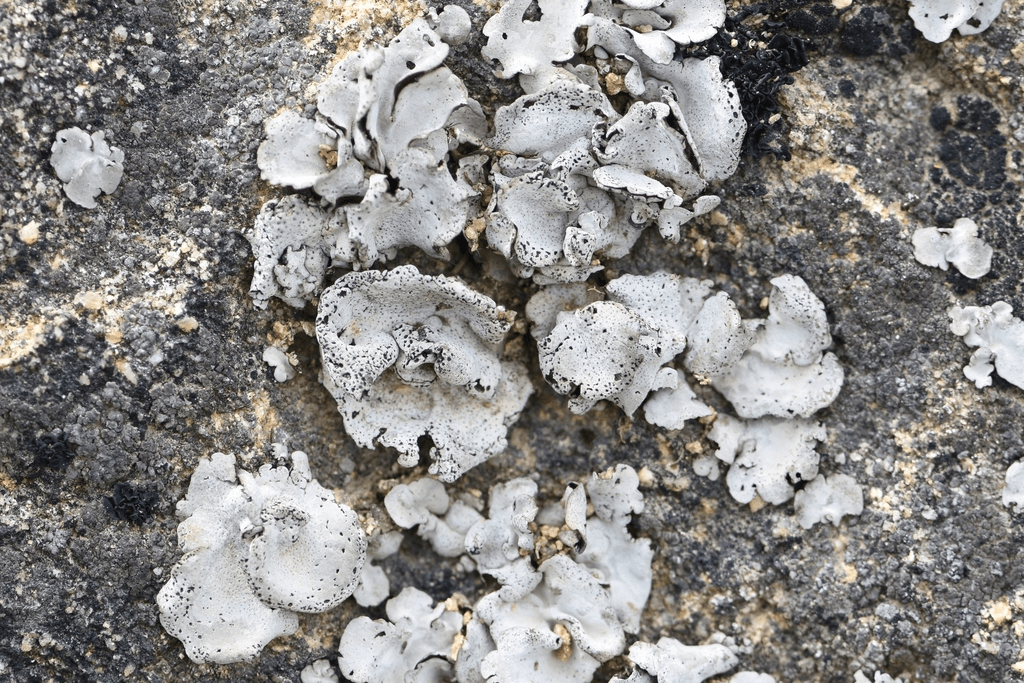
Now this is a varied group of fungi. One way to see this class of fungi is to leave an orange out too long. On the other end of complexity in this class are the dermatocarpon, delightful umbilicate lichens often seen near water. See also the Verrucariaceae which is fairly common in Colorado as a small crustose lichen.
Lichinomycetes
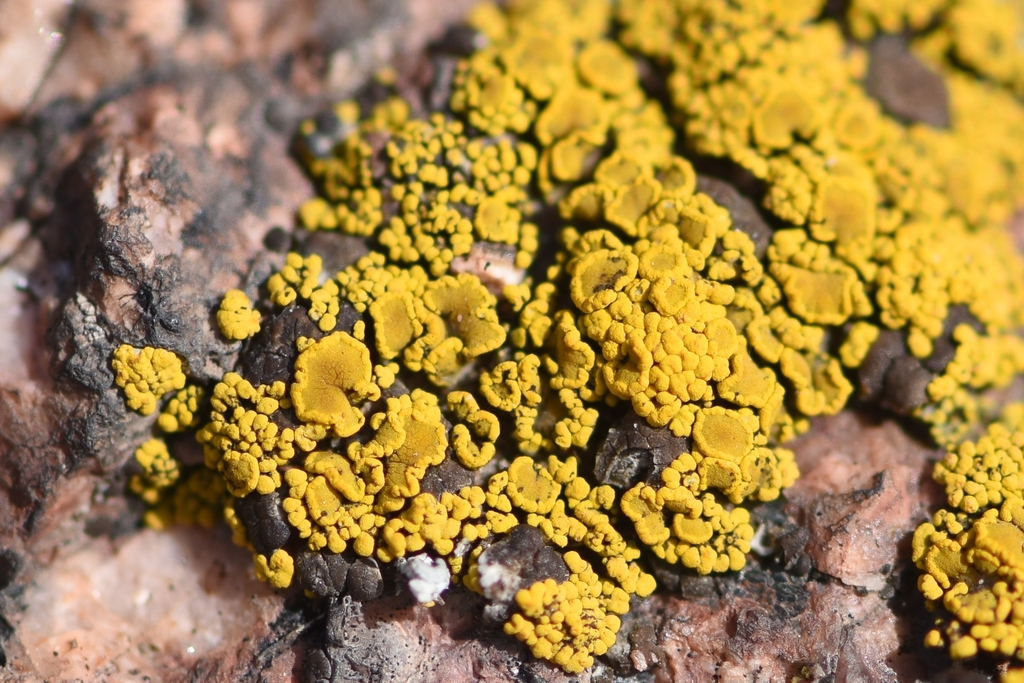
This class of fungi will be seen in nearly every habitat in Colorado as it contains the all gold colored family Candelariaceae, we have two genera in Colorado Candelaria and and Candelariella. But it also contains the jet black Lichinella.

So there we have the main parts of the lichen tree. The next step is to dive into the various families that call Colorado home. Which will hopefully be coming soon.
Footnotes:
1 Fungi are considered “lichenized” when they have a symbiotic relationship with an algae or bacteria.
2 Basidiomycota, which contains our most familiar fungi including the ones you might have in your fridge right now, also contains some lichens. Most live in tropical climates. Click here for a photo of the genus Cora common way high in the Andes mountains.
 Colorado Lichens and Friends