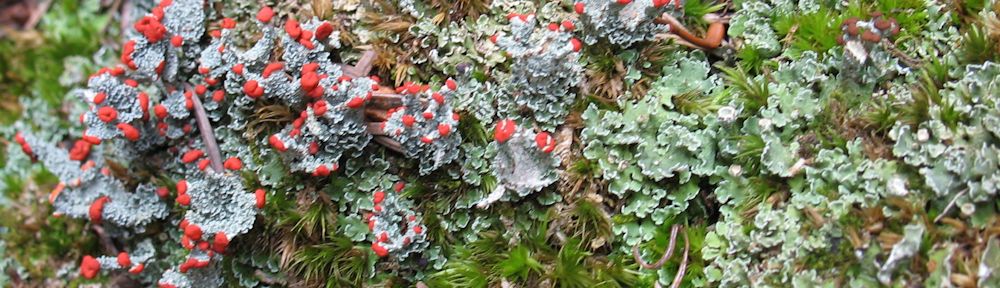
If fruticose lichens are the most fun type of lichen, umbilicate lichens are the most otherworldly. Rising from a single anchor point umbilicate lichens then often form a great saucer sometimes reaching inches across, that’s huge for a lichen!
Perhaps one could pick apart the finite differences between fruticose and umbilicate but generally they are easy to differentiate. The real difficult are some smaller umbilicate lichens which begin to look like a crustose species.
The name Umbilicate comes from the latin umbilicatus for the navel. The depressed center point in the lichen rising from a central umbilus, or attachment point. If you want to ignore this fact and remember them for resembling an umbrella I think you may enjoy a more happy life.
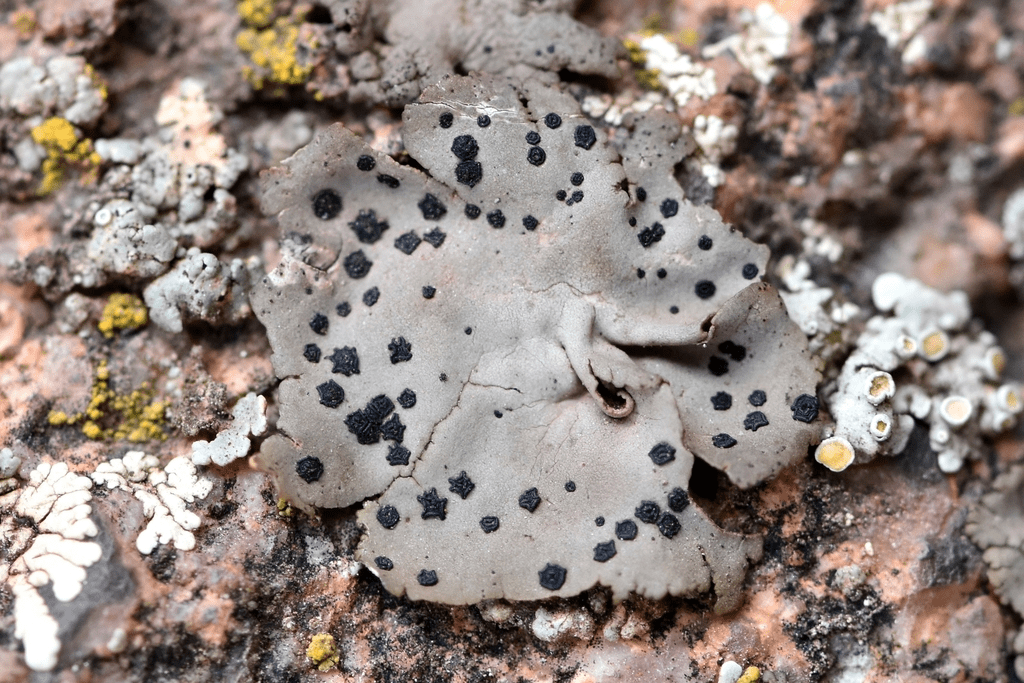
One cannot simply mention the umbilicate lichens and not mention the genus umbilicaria. They can be easily removed to see the single anchor point and have been eaten in the past as a starvation food. They are rumored to have been eaten my George Washington’s troops at Valley Forge, although I failed to find a primary source for this. Sometimes it’s best not to research your favorite anecdote.
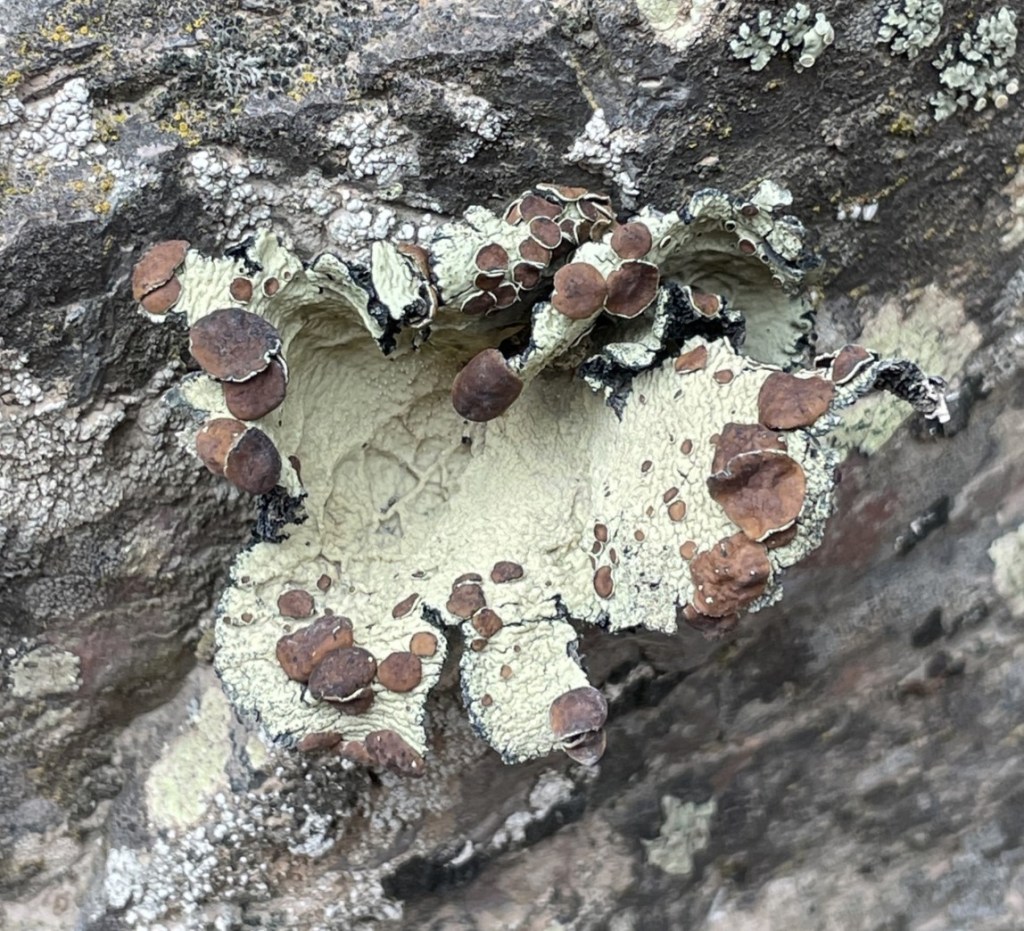
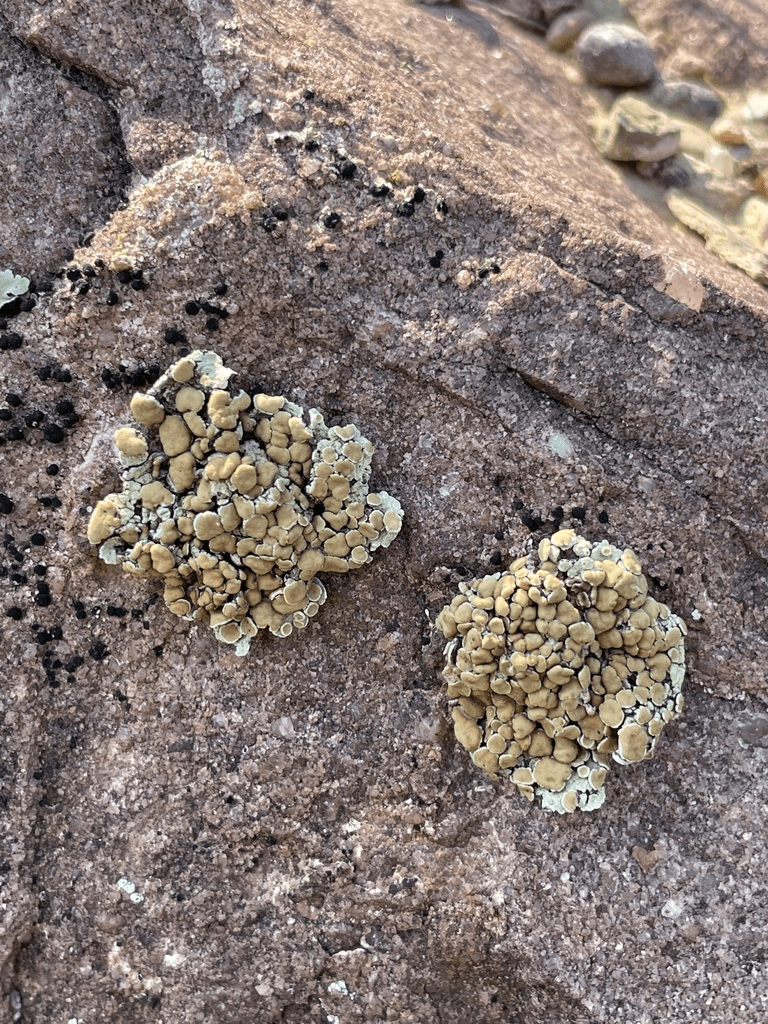
The other major umbilicate around are certain members of Rhizoplaca and Protoparmeliopsis. Ranging from the clearly umblicate to some that would need to be remove to confirm (Keep this to a minimum as it is destructive to the lichen).
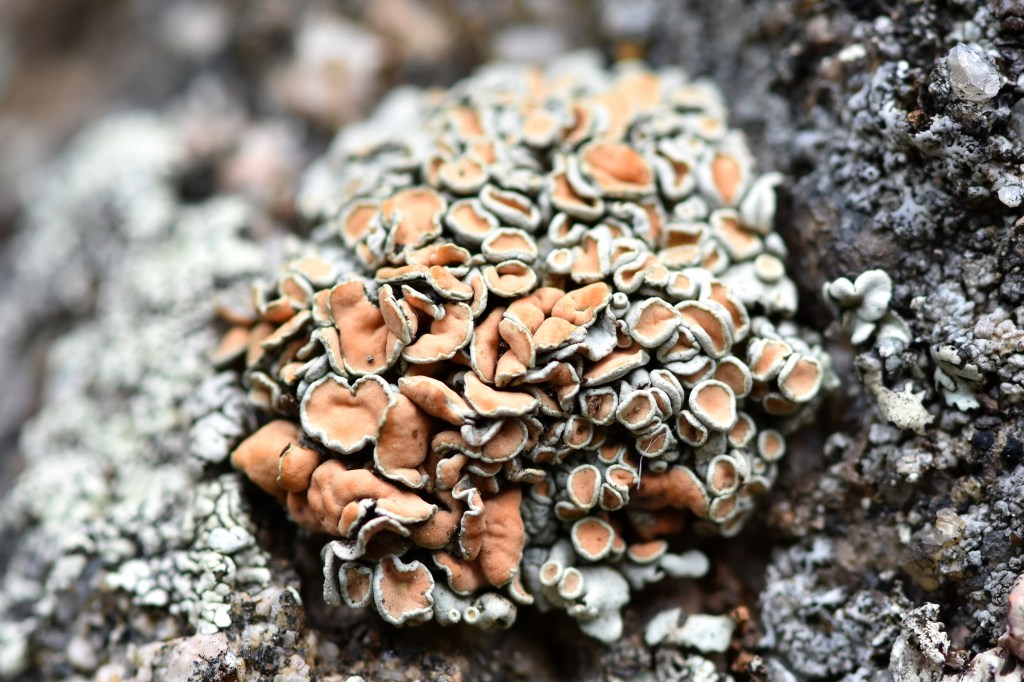
You may have to take my word that this Rhizoplaca chrysoleuca is attached to the rock from a single point. Boulder, CO.
 Colorado Lichens and Friends