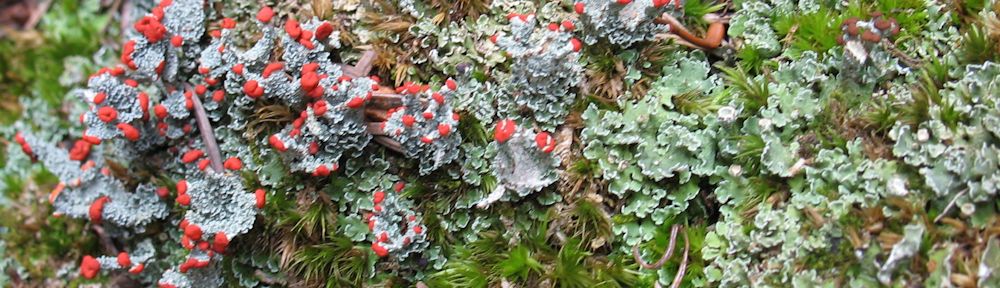
Here at Colorado Lichens we love the obscure, the overlooked and the small. I was immediately taken when I learned about the order Selaginellales, the spikemosses.
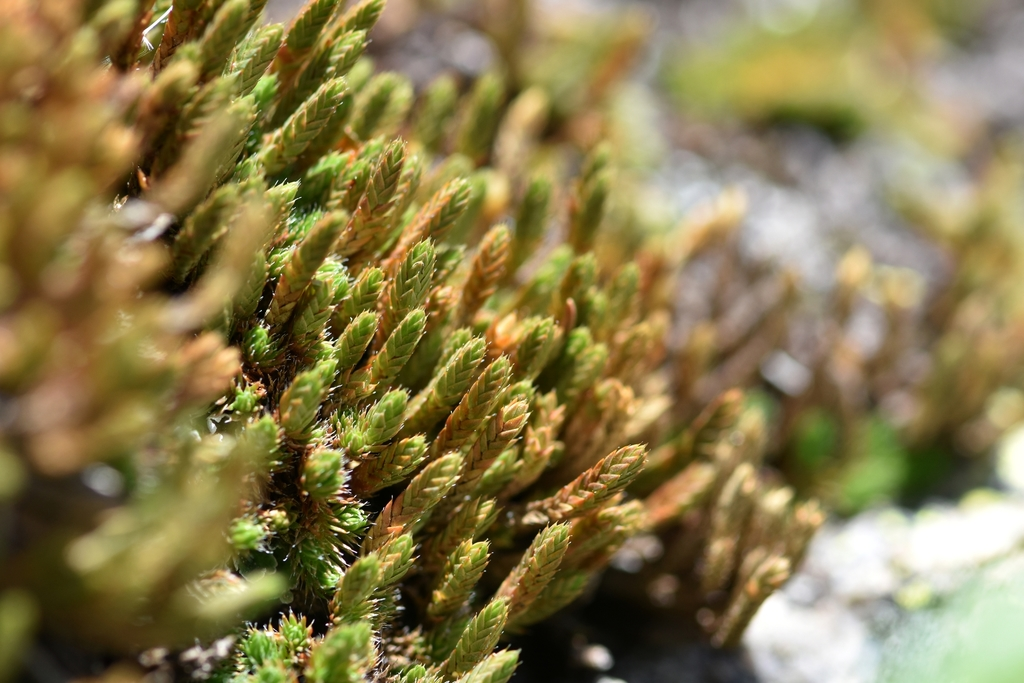
Spikemosses belong to an obscure and old group of non-vascular plants, the class Lycopodiopsida. Their life history sounds like a people are just making up new words. I took the following excerpt from a USDA profile on Selaginella densa.
The spikemoss life cycle differs from that of flowering plants.  At
branch ends, four-angled "cones" or strobili are formed.  Each has two types of spore-bearing structures, microsporangia and megasporangia, in the leaf axils, with megasporangia located below the microsporangia [61].  Microspores are released passively to fall through the strobili to the ground [32].  At maturity they will release microscopic, flagellated sperm cells.  The sperm require water to swim to the egg cell which develops from cells of the megasporangia.  Where fertilization occurs is not known [52].  Tissue surrounding the fertilized egg may carry on photosynthesis as well as provide stored food for the developing embryo.  This entire structure may be shed or held in the leaf axils of the strobili while the embryo develops.  The necessity of water for sexual reproduction restricts the habitat of spikemosses [15], and young plants are not often reported [18,52].
There are six species of spikemoss in Colorado. A recent taxonomic shuffle on iNaturalist split Selaginella densa into There are six species of spikemoss in Colorado. Ackerfield’s Flora of Colorado had five and a recent taxonomic shuffle on iNaturalist split Selaginella densa into Selaginella densa and scopulorum. They along belong to a single genus.
You can find spikemoss in the foothills and mountains, but only in the wetter areas, they seem to be fond of steep slopes. They stick out from other oddball plants by being much larger than mosses, often forming dense tangled mats, or by their scaly appearance.
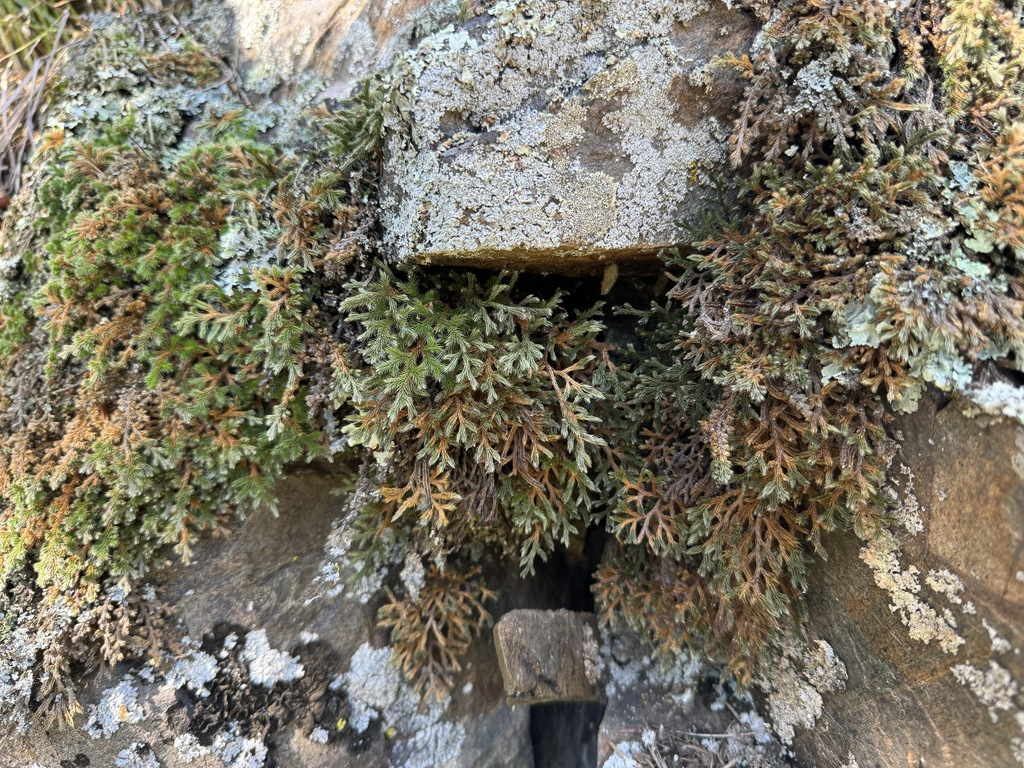
If you want to try to identify them, I seem to struggle greatly at this, it is important to understand some basic anatomy. I certainly hope to update when I do.
Care should be taken to differentiate the leaves of a spikemoss from the Strobilus. The strobilus is the spore producing structure, and generally required to identify to species. Perhaps someday I update this page on how to do just that. For now I am just going to be happy that at least I know these unique plants exist.
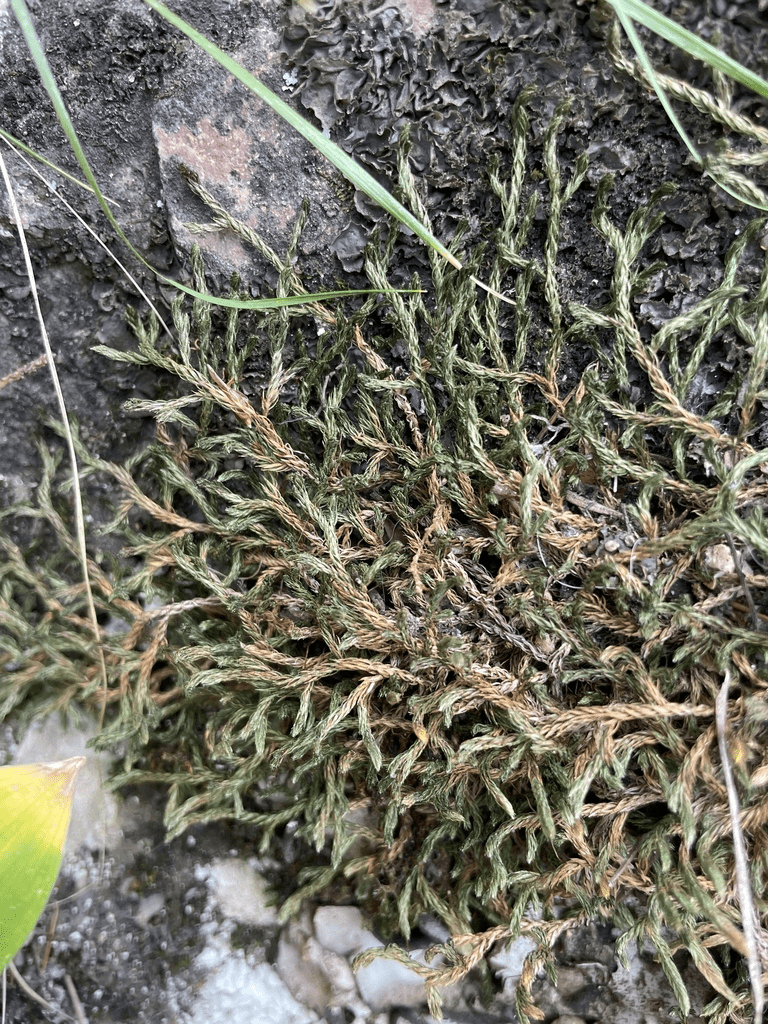
Annotated Checklist of Colorado Spikemoss
Selaginella densa– By far our most common species, its vertical scaly towers are often found growing amougst rocks
Selaginella mutica
Selaginella scopulorum – The alpine replacement to S. densa.
Selaginella selaginoides – Extremely rare in Jackson County
Selaginella underwoodii
Selaginella weatherbiana
 Colorado Lichens and Friends