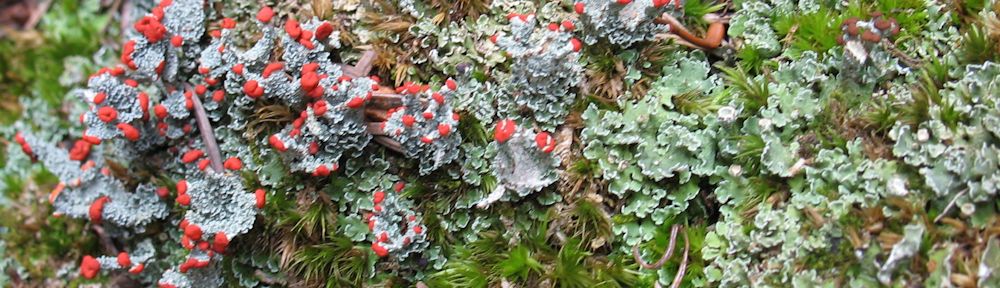
Another new year and things have been quiet over here at Colorado Lichens, but we’ve got some big plans for the future.
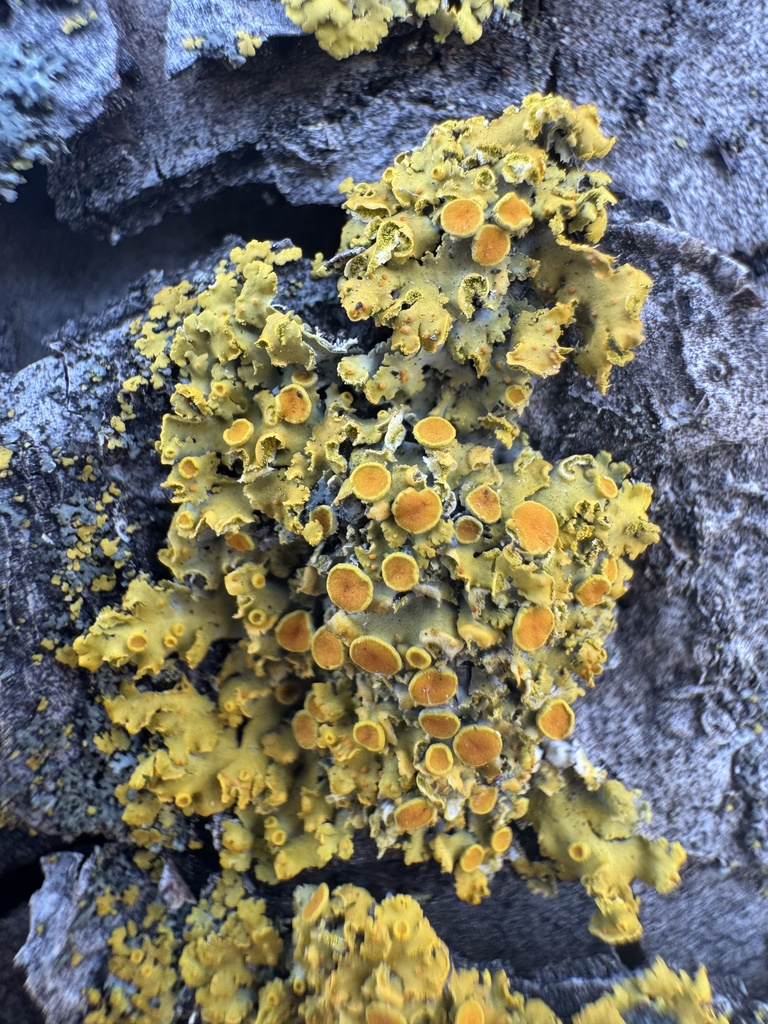
Since starting some work on the website in 2022, I’ve been wondering what the website should be. Now I have a plan for the next few years. Since starting my pursuit of learning the lichens, one thing has really stuck out to me, and that is the absence of recent information about Colorado lichens. The books in my collection oriented for the state are wonderful books, but are now many decades old. The state doesn’t even have a full published catalogue of the species that are present in the state1. So, the goal for the site to come is two-fold.
- To provide the tools to identify Colorado lichens. The best resources for lichens are jargon heavy and highly technical. Often, they require collection and microscopy of lichens. We can’t let go of words like perithecia and rhizines, but we can define those for you and call something bumpy versus rugose.
- Focus on which lichens can be identified in the field! In the early days of ornithology, many birds were considered impossible to separate in the field. Surely strides can be made with lichens as well. Provide resources and accounts for the lichens of Colorado. Can we follow in the footsteps of other great regional nature websites?
If you poke around the site, you will see that this is already starting to be built.
- An illustrated glossary for the terms you need to learn. Sorry all the jargon can’t go away.
- Lichen flora of key Colorado habitats
- Taxonomy of lichens. Currently an overview of the major taxonomic groups, hopefully someday information about the species that call Colorado home.
I’ve decided to publish these improvements as I go, instead of waiting for finished products. This means there will be mistakes, typos and corrections to be made. Watch out I am a perfect example of the Dunning–Kruger effect. Currently, learning just how much I don’t know.
A bit more about the topic of citizen science and the role of amateur naturalists
This is something I am really passionate about. So, excuse me while I talk about birds for a while, my first passion. Before the advent of binoculars, ornithologists had to shoot their birds to learn about them. The great bird explorers of the 1800s, like James Audubon, carried not a camera and binoculars but a shotgun. Texts about birds used dichotomous keys, and relied heavily on measurements. The names for birds were all in Latin, and ignore the names everyday people used for them. Roger Troy Peterson published A Field Guide to the Birds in 1934, revolutionizing the identification of birds in North America2. He coined the Peterson Identification System, which used a combination of visual identification marks to identify birds, instead of the jargon heavy scientific literature at the time. Around the same time, consensus built around the common English names for birds. However, the scientific community did not change at the same pace. It still required the same methods for scientific data collection, often disregarding layperson observations as un-scientific. Yet the revolution continued and the birding community got better and better at field identification. Species Peterson himself may have thought inseparable became routine identifications. The laypeople outnumbered the scientists 100s to 1.
Then came the next massive change– the internet and eBird. Now all these experienced birders could document their sightings and share them. The advent of digital cameras allowed for photographic documentation. Birders could create datasets scientist could only dream of: abundance, changes to historical distribution, and year to year variations. Hundreds of papers are published using eBird data each year. The scientific community finally switched from only allowing their own data to relying on that generated by the amateur too3. We are right at the start of the next revolution, artificial intelligence4 assisted identifications.
This same revolution is now taking place in most other kingdoms of life. Plants, mammals, fish– just about everything have identification guides using Peterson’s principles. Millions of data points are gathered on sites like iNaturalist.
But what of the organisms small and understudied? The moss, the liverworts, and yes the Lichens. Maybe someday down the road Colorado Lichens can be a little part of the puzzle that brings our Lichen flora out of the dark ages of specimen packets, microscopes, and dichotomous keys to a field guide that anyone can pick up and feel secure in knowing they are looking at a beautiful Pannaria tavaresii5.
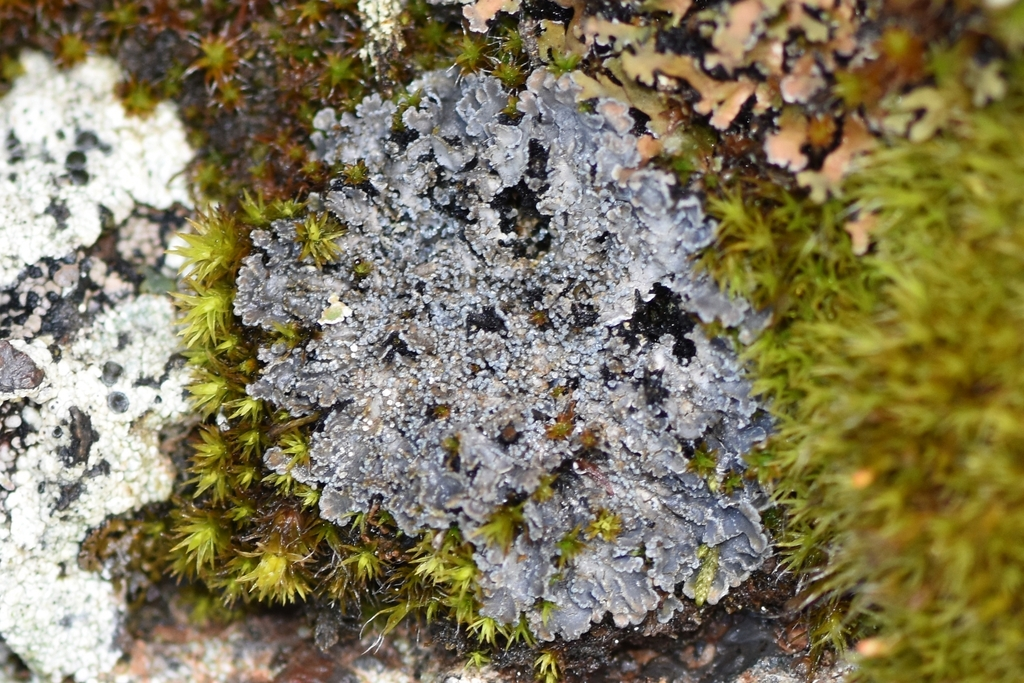
So let’s get into the field, pick up our cameras6, stare at some beautiful thalli and figure out who exactly our Colorado Lichens are.
Footnotes
- I have to give credit to William A. Weber who has complied the best information on Colorado Lichens, including several iterations of a checklist of Colorado Lichens. I cite his work often.
- As any good story, the truth tends to get in the way. I was able to find an article that mentioned Florence Augusta Merriam‘s Birds Through an Opera-Glass, published in 1889, as the first field guide to birds. I don’t doubt that similar works were written in Europe as well.
- There is obviously a need for serious scientific research, using the same tried and true methods. However, especially in understudied groups, I like to think the general public can still contribute greatly.
- I’m actually not aware of any true AI being used. Right now the models rely on machine learning. I am only aware of iNaturalist including lichens. It already recognizes some of the easy ones!
- Someday we will need common names for lichens! It really is the dark ages.
- Make sure to submit your lichen observations to iNaturalist or your other favorite site.
 Colorado Lichens and Friends